The British East India Company Is My Roman Empire
A company waged war, toppled governments, and collected taxes from twenty million people. In 1765. Weyland-Yutani and Omni Consumer Products aren’t predictions, they are echoes.
 By The FuturePunk Professor
20 Sep 2026
4 min read
By The FuturePunk Professor
20 Sep 2026
4 min read
Contents
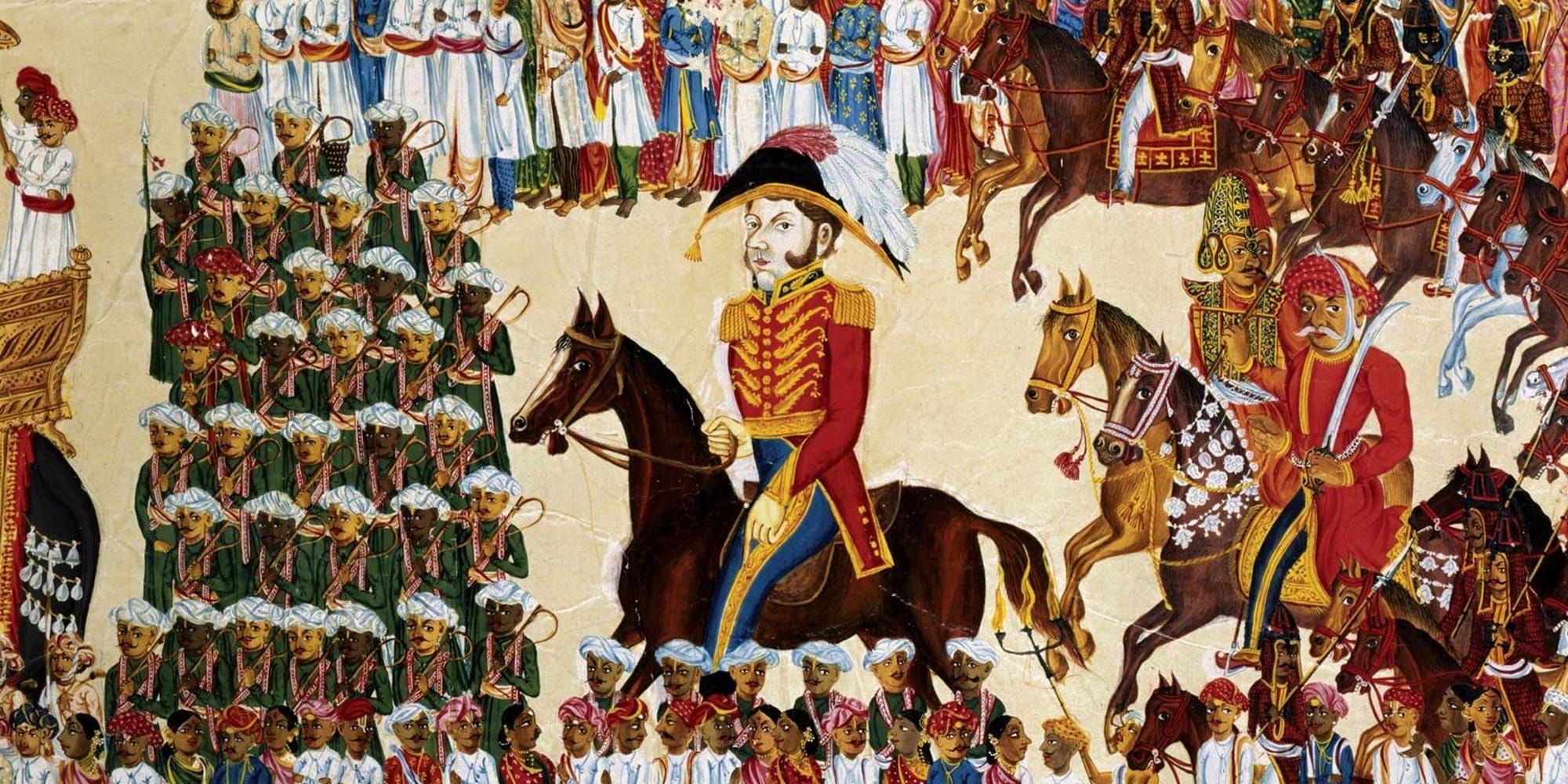
The British East India Company is my Roman Empire and it's not even close.
But why would someone obsessed with the future spend so much time thinking about a bloodthirsty corporation responsible for the subjugation, pillage, and destruction of an entire subcontinent?
Taking Stock
The British East India Company was one of the first joint-stock companies, created by a charter signed by Queen Elizabeth I in 1600.
Like similar joint-stock ventures, including the Dutch East India Company (VOC), the Hudson's Bay Company, and the Royal African Company, the British East India Company was a proto-corporation that operated under a royal charter, granted by the government. But it was given almost free rein, as much the result of the great distances involved and amount of time it took to communicate as the desire for plausible deniability.
That's because the goals of the state and the goals of the company were often aligned; there were just shareholders to appease (and hopefully enrich along the way).
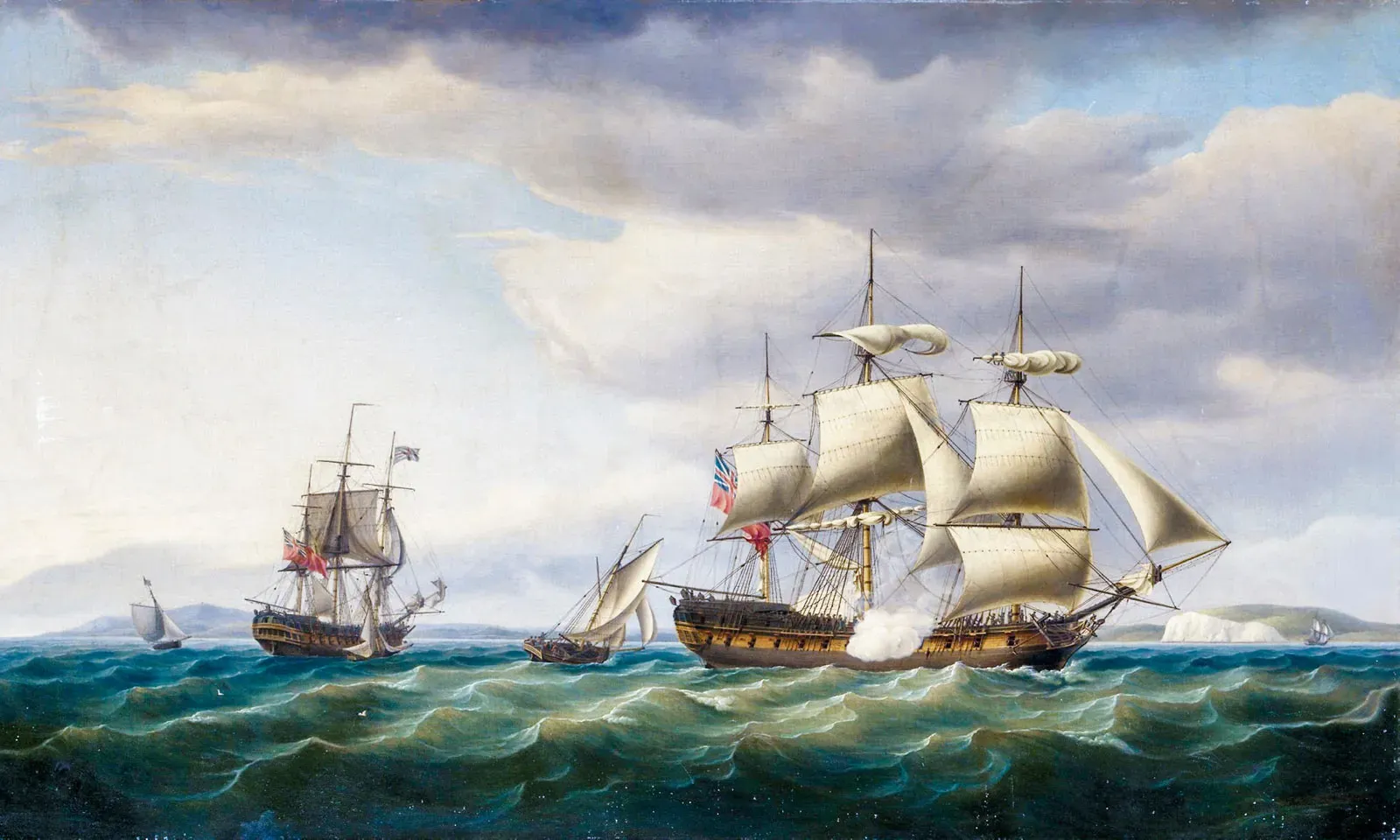
While the British East India Company was incorporated in 1600, it wasn't until the 1700s that things really went haywire.
During its peak, the Company had a private army that surpassed the Crown's in size and effectiveness, allowing it to exercise political control over most of the Indian subcontinent, including its millions of people, and eventually securing the authority to levy and collect taxes. This is a company waging war, toppling governments, and collecting taxes.
They oversaw the final decline of the Mughal Empire, effectively taking control but keeping the Emperor as a convenient figurehead until 1857, while transferring its vast wealth to London. The Company also became involved in the opium trade, destabilizing China in the process. And its policies played a decisive role in the deaths of millions during a famine brought on by drought in Bengal — during which the Company continued to raise and collect land revenues, and their associates cornered the grain market.
So that's the TL;DR — but what does that have to do with the future?

The Once and Future Company
Before the advent of capitalism, progress was associated with ideas — that's what the Renaissance and the Enlightenment were all about.
Political theory, philosophy, increased understanding of math, science, and the natural world — these were the measures of progress.
Then capitalism, powered by the Industrial Revolution and the death of the Ancien Régime across Europe, made us associate progress with technology.
Both forms of progress co-existed, until capitalism won out.
And that's how we end up where we are today, constantly bombarded by dystopian imaginings of our future, filled with evil megacorporations, space colonialism, the threat of robot replacement, or the creation of a permanent underclass.
Weyland-Yutani. Buy n Large. Omni Consumer Products.
These companies resonate because if you follow capitalism to its end state, that's what we get.
But the British East India Company revealed to us that Weyland-Yutani is not capitalism's end state.
It is capitalism's only state.
Everything else is simply a restraint; or an attempt at restraint.
It's why I believe the corporation is the very first artificial intelligence. It has only one goal: grow, no matter the cost.
The EIC was one of the first entities to exist beyond the bounds of any single life, with its own set of operating instructions and a very simple set of goals — grow, profit — baked into its very core. I don’t think it’s a coincidence that one of the very first corporations raised an army, subjugated independent nations, and raised taxes, because it was simply following its directive.
As the world has changed, the corporation has changed too. But underneath it all, it's the same entity as the British East India Company — what I call the Great Devourer — doing whatever it can to consume and grow.
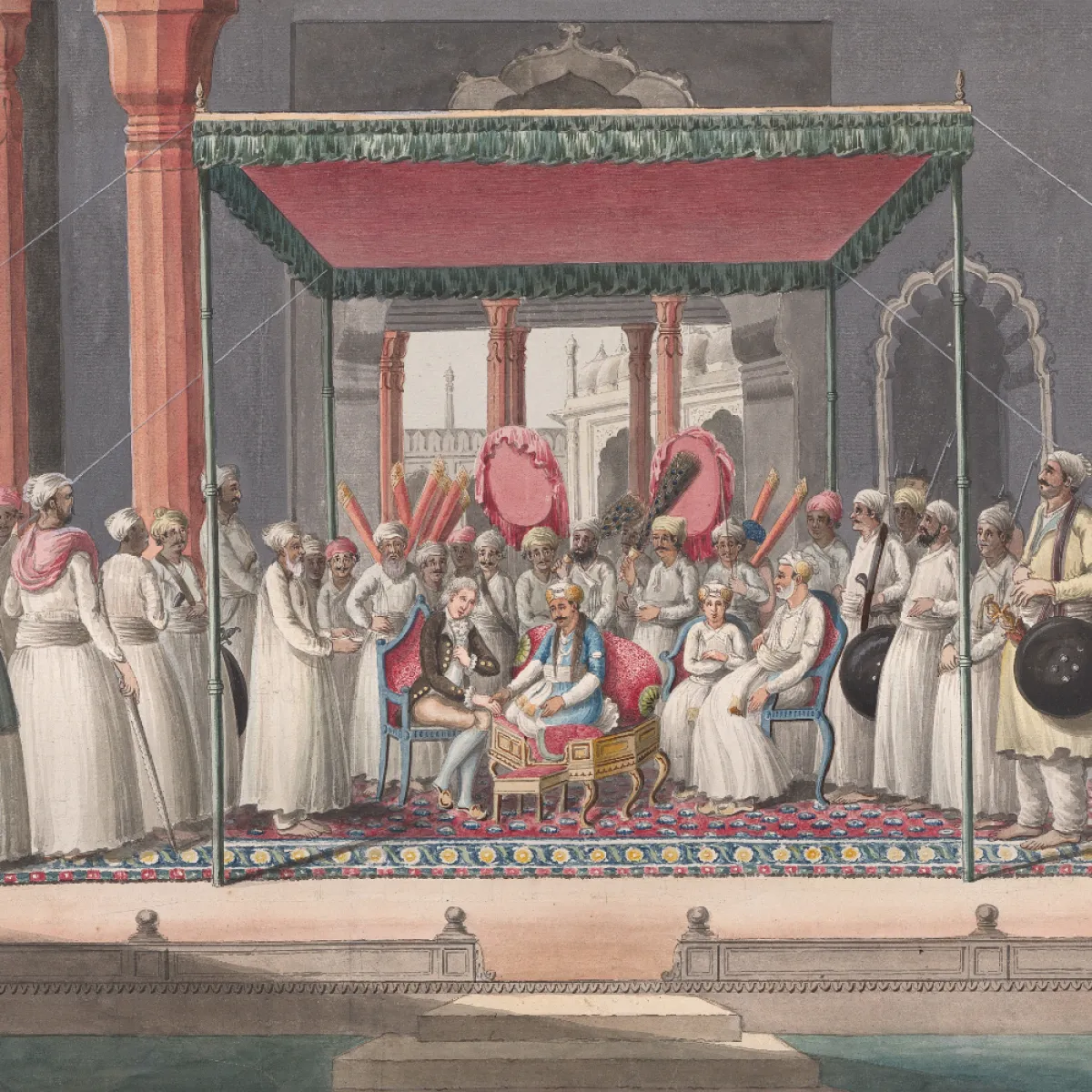
Too big to fail, 1773
At its height, the British East India Company had a private army that it used to control the population, topple rivals, and extract untold amounts of wealth. It also almost brought down its own government when it became too big to fail — and then received one of the first corporate bailouts in history, the Tea Act — which led to the Boston Tea Party, and the Sons of Liberty dumping Company tea into Boston Harbor.
This entire episode showed us what the corporation is designed to do — what it will do, when given the freedom to do so. Every single time. The last few hundred years have seen attempts to restrain the corporation with various laws and regulations — while the corporation itself has become more sophisticated, earning itself personhood and the rights that come with it.
Dystopian science fiction doesn't need to imagine what the corporation will do in the future — we already know. We've been living it in slightly different forms for over 400 years.
File details
- Filed
- 20 Sep 2026
- Record
- IF-DISPATCH-260920
The Tale of the Tape(worm)
The Story That Gave Us the Robot Boy Predicted Ozempic
Karl Marx: First Futurist
In 1848, twenty years before Jules Verne published his first novel and decades before H.G. Wells was even born, Karl Marx did something unprecedented. He didn't just critique capitalism—he invented a new way of seeing the future.
Welcome to the Future Concern
We are an independent studio of research, storytelling, and speculation. Part archive, part laboratory, part time machine.